




Frequently Asked Questions

Shipping & Returns: Need help with your purchase? We're happy to assist!
Send Us An EmailBrand Partnerships: Have a collaboration in mind? Let's build something thoughtful, together.
Send Us An EmailCareers: Ready for your next opportunity? We'd love to hear from curious, passionate people.
Send Us An EmailEvents: Thinking of hosting with us? Let's bring experiences to life.
Send Us An Email

 When will my order arrive and what are the shipping charges?


We offer free shipping on all orders above ₹1,000. Orders below that carry a small fee calculated at checkout. Standard delivery typically takes 5–7 business days across India. You will receive a tracking link once your order is dispatched.
What is your returns and refunds policy?
Since tea is a consumable product, we are unable to accept returns on opened orders. However, if your order arrives damaged, incorrect, or with a quality concern, we will make it right. Reach out within 48 hours of receiving your order with a photo of the issue. Full details are on our Returns and Refunds Policy page.
Is your packaging eco-friendly?
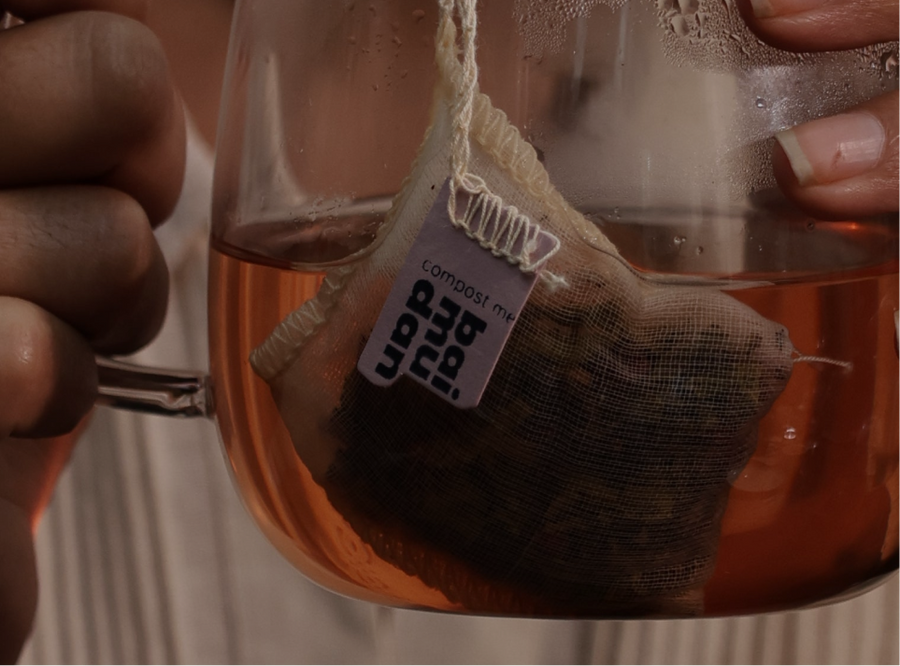
Yes! Our packaging is fully home-compostable. Our cotton tea bags are plastic-free, and we use biodegradable and reusable materials throughout. We are continuously working to reduce our environmental footprint across our supply chain. Sustainability, for us, is not a feature, it is built into the way we source, produce, and package.
Do you offer wholesale or B2B partnerships?
Yes. We partner with cafés, hotels, restaurants, co-working spaces, and brands that believe great experiences begin around a shared table. Our B2B offering includes single-serve tea bags, loose-leaf HoReCa packs, and bulk formats tailored to your scale and service.
Can you create a bespoke blend for our brand?
Absolutely. We partner with brands, creators, and businesses to develop bespoke blends, limited-edition launches, and co-branded tea products that extend your story and create new ways for your community to engage with your brand. Reach us at teapartners@baimudan.com.
Can you build a tea program for our restaurant or hotel?
Yes. We curate tea menus, develop signature recipes, train staff, and design services for hospitality brands, creating tea experiences that complement your food and delight your guests. Get in touch at teapartners@baimudan.com and let’s talk.
How much caffeine is in each tea?
A guide across our range:
Matcha (ceremonial)
Moderate–high
60–80 mg
Assam black tea, Oolong, Green tea
High
40–70 mg
Darjeeling tea, Artisanal blends (green base)
Moderate
30–50 mg
Sencha, Genmaicha
Moderate
25–45 mg
White tea (Bai Mu Dan)
Low
15–30 mg
Hojicha
Low
10–25 mg
Herbal blends (all)
None
0 mg
Which teas are safe during pregnancy?
We always recommend consulting your healthcare provider. As a general rule, our caffeine-free herbal blends are the safest choice. Stressbuster, Powerhouse, Balance, Breather, and Snooze contain no Camellia sinensis and no caffeine. Avoid high-caffeine teas (matcha, Assam, green tea) unless specifically cleared by your doctor.
Is matcha safe to drink every day?
Yes, for most people. Ceremonial matcha offers a smooth, sustained release of caffeine alongside L-theanine, an amino acid that promotes calm alertness without the sharp peaks and crashes associated with coffee. One to two cups a day is a common practice. If you are sensitive to caffeine, pregnant, or have a specific health condition, consult your doctor.
Why do you use cotton bags instead of nylon or paper?
Whole-leaf teas need room to fully unfurl during steeping. Nylon and standard paper bags restrict this expansion. Our hand-sewn cotton bags let the leaves bloom completely, releasing their full aroma and complexity. The result is a cup that rivals the best loose-leaf infusions in the convenience of a bag. Dinshay spent almost two years perfecting our tea bag design before launch.
How long will my tea stay fresh?
Properly stored loose-leaf teas stay fresh for up to one year after opening. Our cotton tea bags, individually sealed in air-tight packaging, last up to three years. Matcha is the most sensitive — refrigerate after opening and use within 4–6 weeks. Our hojicha powder follows the same guidance. Store all teas away from heat, sunlight, and strong aromas.
What categories of tea does Bai Mu Dan offer?
Our range spans five categories, each with a distinct character and purpose:
Pure teas
Single-origin, unblended teas from named estates — Green, Black, Darjeeling, Oolong, and our signature Bai Mu Dan white tea.
Artisanal blends
Founder-crafted blends of whole-leaf tea with botanicals, flowers, and spices. Unique formulations you won’t find anywhere else.
Herbal teas
Caffeine-free infusions of herbs, roots, flowers, and spices crafted for specific moods and moments.
Japanese teas
Sencha, matcha, genmaicha, and hojicha from JAS organic-certified farms in Uji, Kyoto.
Chai series
Bold, spiced black teas in the spirit of India’s everyday masala chai — with an elevated, artisanal touch.
What is the difference between your artisanal blends and your pure teas?
Pure teas are single-origin and unblended, the tea leaf speaks for itself, expressing the character of its specific estate and season. Artisanal blends are the founder’s original creations: whole-leaf teas combined with botanicals, flowers, herbs, and spices into formulations unique to Bai Mu Dan. Both begin with exceptional base teas; the difference is whether the leaf stands alone or becomes part of something entirely new.
Which tea should I start with if I’m new to specialty tea?
It depends on what you usually drink. If you love chai or strong teas, our Black Tea from Doomni Estate or the Six-Spice Chai are a natural starting point. If you prefer lighter, more delicate flavours, the Bai Mu Dan white tea or Genmaicha are gentle and approachable. For something in between, the Darjeeling Tea from Giddapahar or the artisanal Newborn Sun blend are excellent introductions to what single-origin, whole-leaf teas can taste like.
What does “whole-leaf” mean and does it make a difference?
Whole-leaf teas use the full tea leaf, uncut and unbroken, rather than the fannings (dust and fragments) typically used in standard commercial tea bags.
The difference in the cup is significant. Whole leaves have more surface area to release their oils and compounds gradually, resulting in greater depth, complexity, and a cleaner finish. They can also be re-steeped multiple times, each infusion revealing new nuances.
Can I re-steep the same leaves more than once?
Yes — and we encourage it. Our whole-leaf pure teas and Japanese teas are particularly suited to multiple infusions. Sencha and Genmaicha can be re-steeped two to three times; Bai Mu Dan white tea rewards patience with each successive brew revealing a softer, more honeyed character. Reduce steeping time slightly with each re-steep to avoid bitterness.
Which teas are best enjoyed without milk?
Almost all of them, honestly. Whole-leaf teas are crafted to be enjoyed on their own, where their full aroma and flavour can come through. The exception is our chai blends and the Assam black tea, which are traditionally brewed with milk and develop a lovely velvety body that way. Matcha also works beautifully as a latte. For everything else, Darjeeling, green tea, white tea, Japanese teas, and herbal infusions. We recommend starting without milk.
Which estates does Bai Mu Dan source from?
We partner with three carefully chosen Indian estates, each selected for their commitment to both the land and the people who cultivate it:
Donyi Polo Tea Estate
Siang, Arunachal Pradesh
Marries the briskness of Assam with the floral delicacy of Darjeeling. Technologically advanced; named after the region’s indigenous Sun-Moon faith.
Doomni Tea Estate
Baksa, Assam, Brahmaputra Valley
Cultivating exceptional teas since the late 1920s. Full-bodied orthodox teas with a signature malty richness from fertile alluvial soils.
Giddapahar Tea Estate
Kurseong Valley, Darjeeling
Established 1881. Small, family-run, perched on misty slopes. Layered aromas, refined muscatel sweetness — one of Darjeeling’s most cherished hidden gems.
Why do you work directly with estates rather than buying through brokers?
Direct sourcing lets us know exactly where every leaf comes from, visit the farms, build relationships with the people who grow our teas, and ensure fair and ethical partnerships. It also gives us greater control over quality. We taste, select, and approve each batch ourselves. The story of a tea begins long before it reaches your cup; knowing that story is part of what we offer.
What does “ecologically responsible sourcing” mean in practice?
We choose estates that respect the land they work, avoiding excessive chemical inputs, prioritising biodiversity, and treating their workers fairly. Our packaging is fully home-compostable and we work continuously to reduce plastic across our supply chain. Care, as we see it, extends all the way back to the soil.
Why do flavours sometimes vary slightly between batches?
Tea is an agricultural product shaped by soil, rainfall, temperature, and the season’s particular character. Just as a vineyard produces slightly different vintages each year, tea harvested in different flushes or seasons will carry subtle variations in flavour and aroma.
What makes your Japanese teas different?
All our Japanese teas are sourced from JAS organic-certified farms, widely regarded as Japan’s most celebrated tea-growing region. Dinshay has spent time in Japan studying its tea culture firsthand, and our Japanese range reflects that deep respect for craft and provenance. These teas are minimally processed to preserve their natural character and are stone-milled or carefully steamed, as tradition requires.
What is the difference between matcha, sencha, genmaicha, and hojicha?
All four come from the same plant (Camellia sinensis) but diverge in how they’re processed and what they taste like:
Matcha
Process: Shade-grown, stone-ground into powder
Flavour: Earthy, grassy, creamy, umami
Caffeine: Moderate-high
Sencha
Process: Steamed, rolled, dried
Flavour: Fresh, vegetal, bright, slightly bitter
Caffeine: Moderate
Genmaicha
Process: Sencha blended with roasted brown rice
Flavour: Nutty, warm, toasty, comforting
Caffeine: Low
Hojicha
Process: Roasted green tea leaves and stems
Flavour: Toasty, caramel, woody, mellow
Caffeine: Low
What is the difference between ceremonial and culinary matcha?
We choose estates that respect the land they work, avoiding excessive chemical inputs, prioritising biodiversity, and treating their workers fairly. Our packaging is fully home-compostable and we work continuously to reduce plastic across our supply chain. Care, as we see it, extends all the way back to the soil.
Why do flavours sometimes vary slightly between batches?
Tea is an agricultural product shaped by soil, rainfall, temperature, and the season’s particular character. Just as a vineyard produces slightly different vintages each year, tea harvested in different flushes or seasons will carry subtle variations in flavour and aroma.
Which blend should I choose for sleep, stress, or energy?
Which blend should I choose for sleep, stress, or energy?
Our herbal and artisanal blends are crafted with specific intentions in mind:
If you're looking for… Better sleep:
Snooze — valerian root, chamomile, lavender, and nutmeg
If you're looking for… Stress relief:
Stressbuster — chamomile, lavender, rose, St. John’s-Wort
If you're looking for… Energy without caffeine:
Powerhouse — peppermint, nettle, vana tulsi, fennel
If you're looking for… Calm focus / balance:
Balance — three varieties of tulsi with gotu kola
If you're looking for… Respiratory comfort:
Breather — eucalyptus, ginger, peppermint, clove
If you're looking for… Morning uplift:
Newborn Sun — green tea, chamomile, lavender, rose
If you're looking for… Mood lift / brightness:
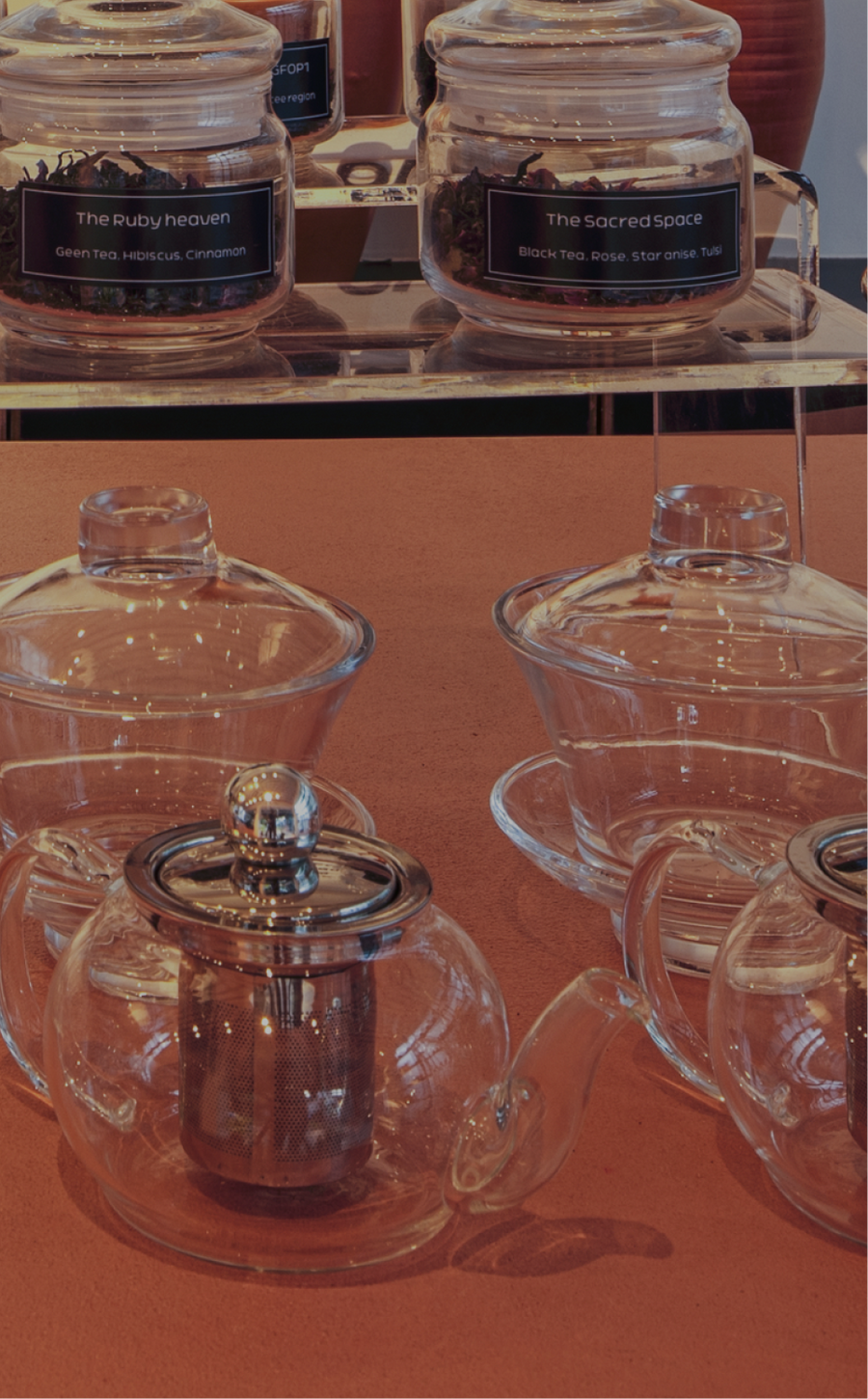
Ruby Heaven — green tea, hibiscus, peppermint, tulsi
If you're looking for… Grounding and clarity:
Soul Catcher — green tea, lavender, mint, cinnamon
Are the wellness benefits of your herbal teas clinically proven?
The botanicals in our blends have well-documented traditional uses and are supported by a growing body of research, chamomile for relaxation, valerian root for sleep, tulsi for immunity, and so on. We don’t make medicinal claims, but we do select each ingredient purposefully and with care. For specific health concerns, we always recommend speaking with a healthcare professional.
Why do you use cotton bags instead of nylon or paper?
Whole-leaf teas need room to fully unfurl during steeping. Nylon and standard paper bags restrict this expansion. Our hand-sewn cotton bags let the leaves bloom completely, releasing their full aroma and complexity. The result is a cup that rivals the best loose-leaf infusions in the convenience of a bag. Dinshay spent almost two years perfecting our tea bag design before launch.
How long will my tea stay fresh?
Properly stored loose-leaf teas stay fresh for up to one year after opening. Our cotton tea bags, individually sealed in air-tight packaging, last up to three years. Matcha is the most sensitive — refrigerate after opening and use within 4–6 weeks. Our hojicha powder follows the same guidance. Store all teas away from heat, sunlight, and strong aromas.